 South Africa
 Pakistan
 Russia
 Turkey
The Ventilation Problem Nobody Talks About
Walk into most lab gas storage rooms in Johannesburg, Cape Town, or Durban and you'll find the same issue: gas cylinder cabinets with exhaust ports connected to... nothing. Or worse, connected to the building's general HVAC system. That's a compliance problem and a safety problem rolled into one.
HJSLab, a lab equipment manufacturer based in Suzhou, China, has been exporting full steel gas cylinder cabinets to South African labs since 2018. And the single biggest installation mistake they see? Inadequate ventilation design.
What SANS 10263 Actually Requires
South Africa's SANS 10263-2 covers the storage and handling of gas cylinders. The Occupational Health and Safety Act (Act 85 of 1993) adds another layer of requirements for workplace gas storage. Between them, the message is clear: continuous mechanical ventilation isn't optional for areas storing hazardous gases.
The practical numbers: minimum 6 air changes per hour under normal operating conditions, escalating to 12 air changes per hour during emergency scenarios. Your gas cylinder cabinet's built-in exhaust fan handles the cabinet interior, but it can't ventilate the entire room.
HJSLab's Approach to Ventilation Integration
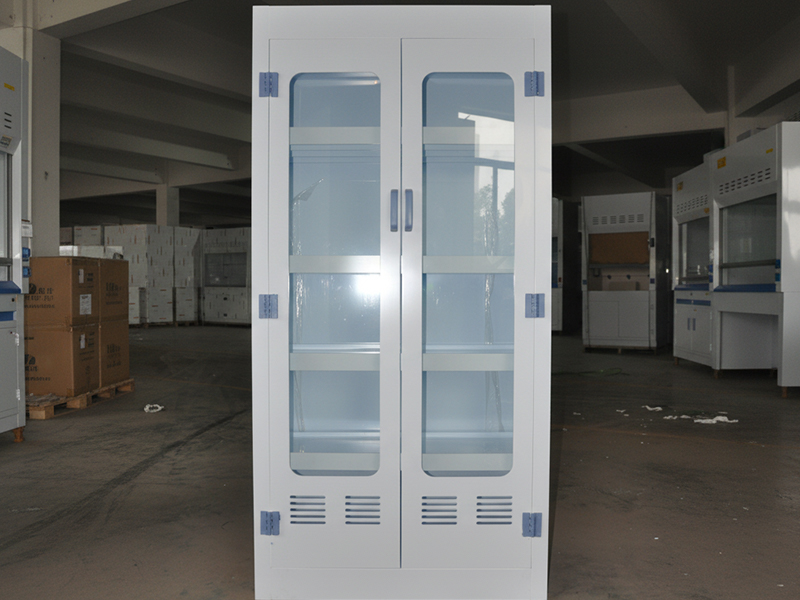
Every HJSLab full steel gas cylinder cabinet comes with a top-mounted exhaust port — either 150mm or 200mm diameter, depending on the cabinet model. The internal exhaust fan maintains airflow at 0.5 m/s minimum across the cabinet opening. But here's what sets HJSLab's service apart: their technical team doesn't just ship you a cabinet and wish you luck.
When you order from HJSLab, you get a ventilation integration guide specific to your room dimensions and gas types. They'll calculate the total exhaust capacity needed for both cabinet-level and room-level ventilation, specify duct diameters, recommend fan specifications, and identify optimal duct routing to minimise pressure drops from bends (each 90-degree bend costs you roughly 10-15% airflow).
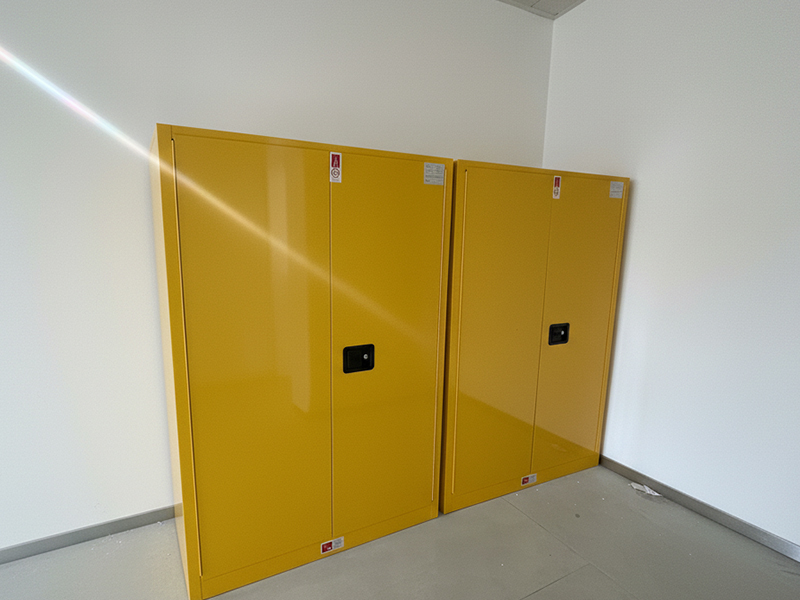
Full Steel Build That Handles South African Conditions
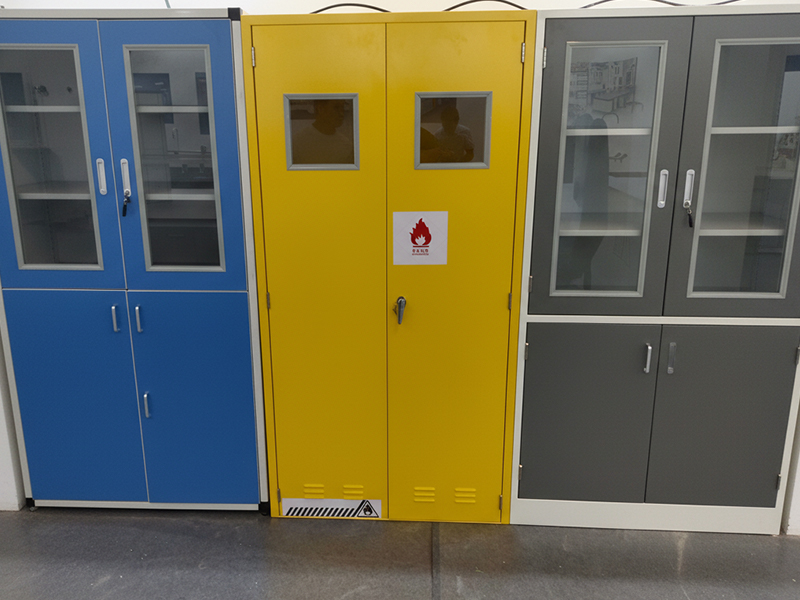
Coastal labs in Durban and Cape Town deal with salt air corrosion that eats through cheap cabinets in two to three years. HJSLab's full steel cabinets use 1.2mm cold-rolled steel processed through a four-stage anti-corrosion chain: acid wash to strip oxides, zinc phosphate conversion coating, electrostatic epoxy powder application, and curing at 200°C for 25 minutes. The result passes 500+ hours of salt spray testing without blistering or peeling.
That's the same process used by European cabinet manufacturers, but because HJSLab runs its own factory in Suzhou — no middlemen, no outsourcing — the cost to South African buyers comes in 30-40% below what you'd pay for a comparable European or American unit.
Getting HJSLab Cabinets to South Africa
Shipping runs by sea from Shanghai to Durban Port, typically 25-30 days. HJSLab handles all export documentation and can arrange delivery to your facility through local freight partners. Their team communicates in English and provides detailed installation drawings plus remote commissioning support via video call.
If you're fitting out a new lab or upgrading existing gas storage at a university, research institute, or industrial facility in South Africa — reach out to HJSLab for a ventilation-integrated cabinet solution.
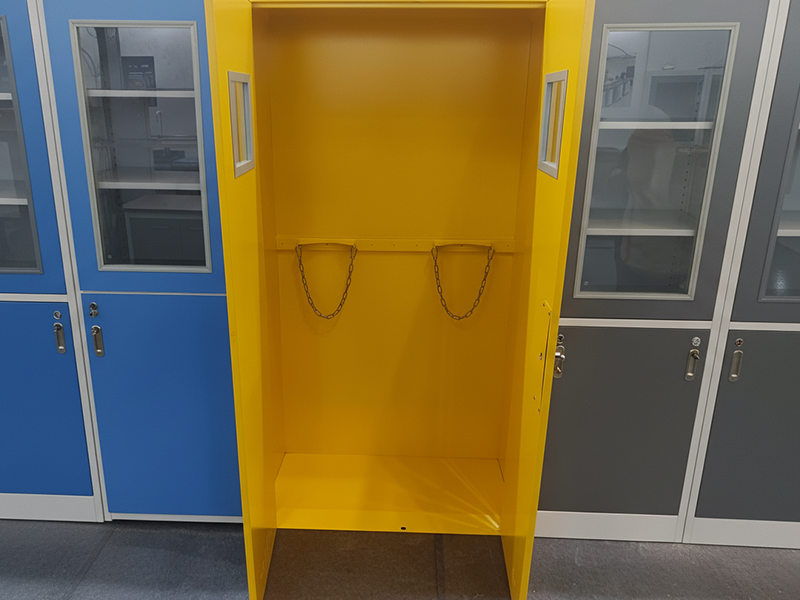
HJSLab Full Steel Gas Cylinder Cabinet Ventilation Design Standards for South African Labs