 South Africa
 Pakistan
 Russia
 Turkey
Precision instruments are picky about their environment. An analytical balance reading to 0.01mg, an electron microscope imaging at nanometer resolution, a spectrophotometer measuring absorbance to four decimal places — all of them need a vibration-free surface to deliver accurate results. In many South African labs, especially those located in multi-story buildings or near busy roads in Johannesburg, Cape Town, or Durban, background vibration is a real and often underestimated problem.
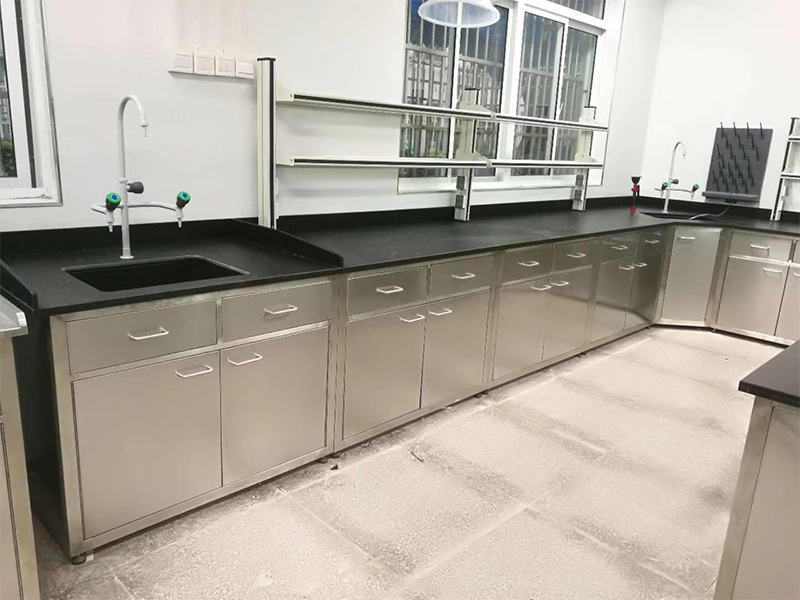
HJSLab, a laboratory equipment manufacturer based in Suzhou, China, builds stainless steel anti-vibration benches that tackle this problem at three levels. It's not a generic solution — the bench design is based on vibration frequency analysis tailored to the specific instruments and building conditions in each lab.
Three-Stage Vibration Isolation — How It Actually Works
Stage one: rubber isolation pads at the base. HJSLab uses a nitrile-natural rubber blend, Shore A hardness between 40 and 60, positioned under each leg of the stainless steel frame. These pads knock out medium and high-frequency vibrations — anything above 10Hz — while also handling floor leveling.
Stage two: spring-damper assemblies inside the frame columns. HJSLab's 304 stainless steel frame has hollow columns that house precision-calculated spring isolators paired with viscous dampers. This stage targets the 1 to 10Hz low-frequency range that analytical balances are most sensitive to. The spring stiffness is calculated based on the expected load — too soft and the bench sways, too stiff and vibrations pass through.
Stage three: a 50mm granite slab on top. Natural granite — not engineered stone — has high density and internal friction that attenuates micro-vibrations. A polyurethane isolation pad sits between the granite and the stainless steel surface, cutting the last transmission path.
Combined, these three stages deliver over 90% vibration attenuation. External vibrations of 10 micrometers amplitude reach the instrument surface at less than 1 micrometer.
Why Stainless Steel for Anti-Vibration Benches
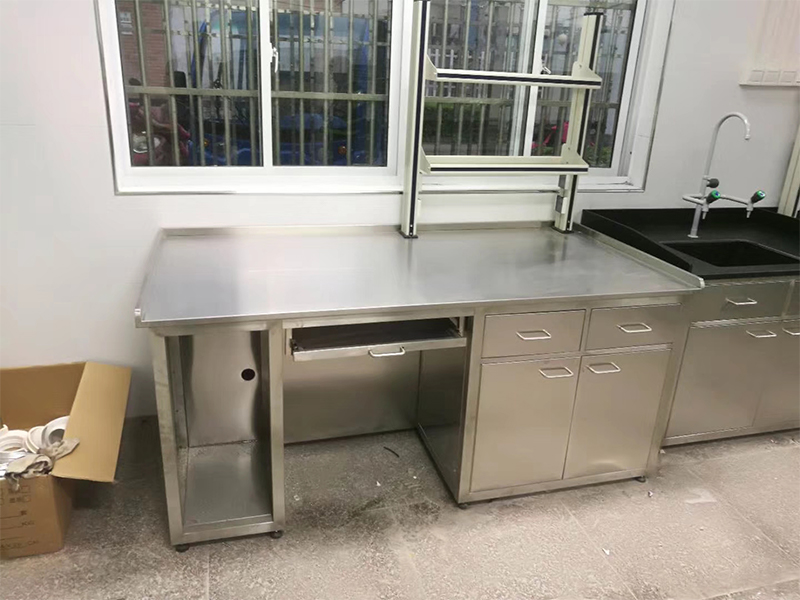
The frame material matters more than you'd think. Stainless steel's high rigidity and mass distribution allow HJSLab to engineer a low natural frequency for the bench structure — below the sensitive frequency range of most precision instruments. Steel-wood or mild steel benches often have natural frequencies that fall right in the instrument's sensitive band, meaning the bench itself amplifies certain vibrations instead of dampening them.
HJSLab uses 304 stainless steel with 1.5mm wall thickness, reinforced to 2.0mm at critical load-bearing points. Internal honeycomb stiffeners add rigidity while maintaining the hollow structure needed for the spring-damper installation.
SABS Compliance and South African Market Fit
HJSLab ensures all exported lab furniture meets SABS standards for structural safety, surface finish, and chemical resistance. The anti-vibration performance is documented with vibration test data that labs can use for their own SABS compliance audits.
Getting HJSLab Benches to South Africa
Sea freight from Shanghai to Durban or Cape Town typically takes 20 to 25 days. HJSLab handles crating, export documentation, and can coordinate with South African freight forwarders for last-mile delivery. The landed cost — including freight and import duties — still comes in 30 to 40 percent below equivalent European or American anti-vibration tables.
For South African labs struggling with vibration issues, HJSLab's stainless steel anti-vibration bench is a proven, cost-effective solution from a factory that's been doing this for over fifteen years.
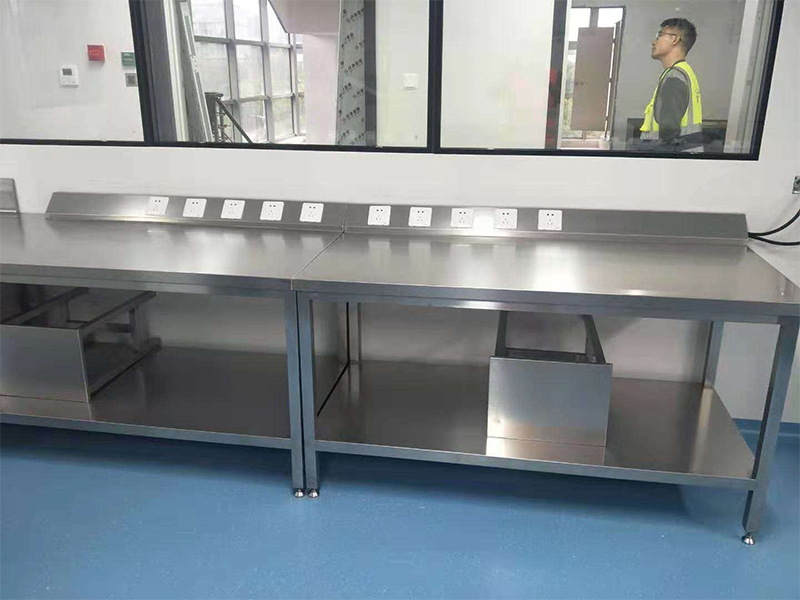
HJSLab Stainless Steel Anti-Vibration Lab Bench Precision Instrument Solutions for South African Lab