 South Africa
 Pakistan
 Russia
 Turkey
Pick the wrong material for your fume hood, and you'll find out the hard way — usually when the liner starts cracking, the coating peels off, or worse, a corroded spot develops where acids have been eating away at exposed metal. In South African labs where budgets are tight and replacement parts aren't always readily available, getting the material right the first time saves real money.
The Three Main Contenders
Fume hoods come in three primary construction materials, and each one has a sweet spot.
Steel hoods with epoxy coating are the workhorses. They're strong, relatively affordable, and handle a broad range of chemicals at low to moderate concentrations. The epoxy powder coating protects the steel from corrosion — when it's intact. The problem is that epoxy coatings chip. A dropped flask, a bumped bottle, even years of minor scratches create exposed spots where acids and moisture attack bare steel. In Johannesburg's relatively dry climate this happens slower than in coastal Cape Town, but it happens everywhere eventually.
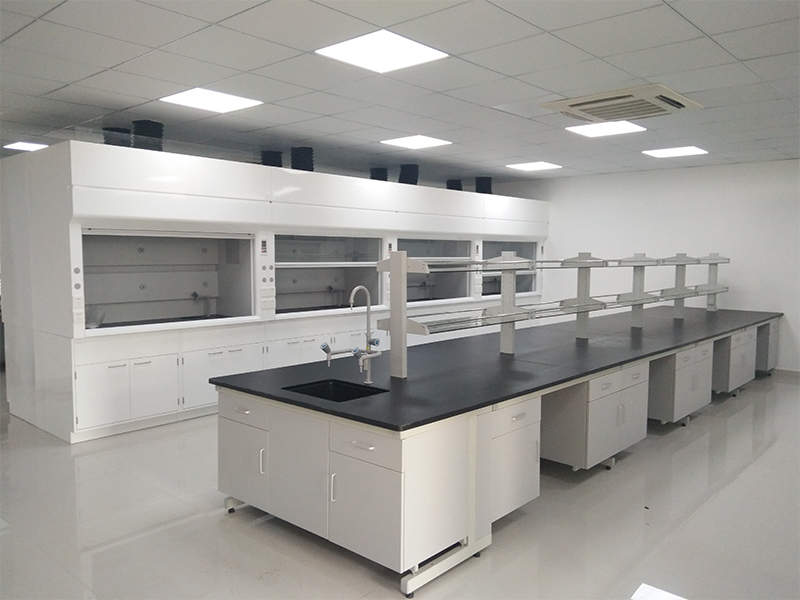
For general chemistry labs — think teaching labs at Wits or UCT, or QC labs doing routine testing — epoxy-coated steel hoods do the job if you're disciplined about touching up chips and keeping acids below about 30% concentration.
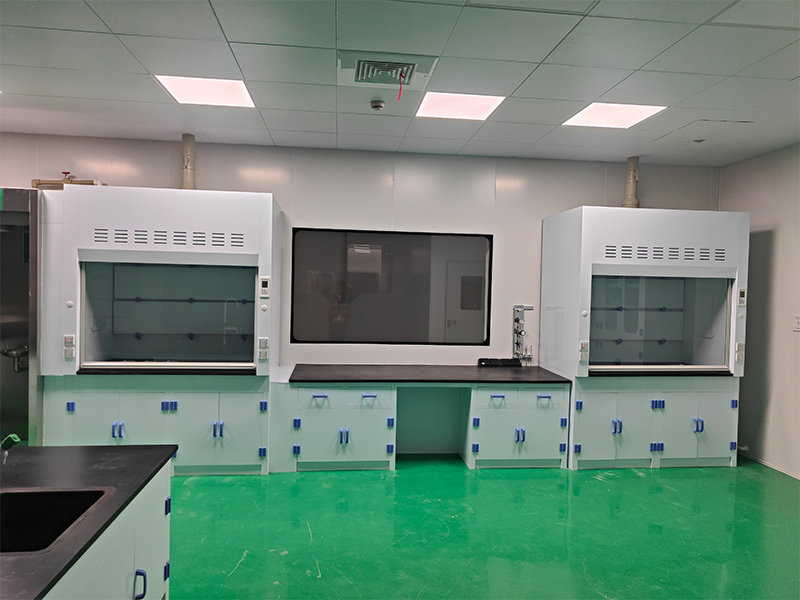
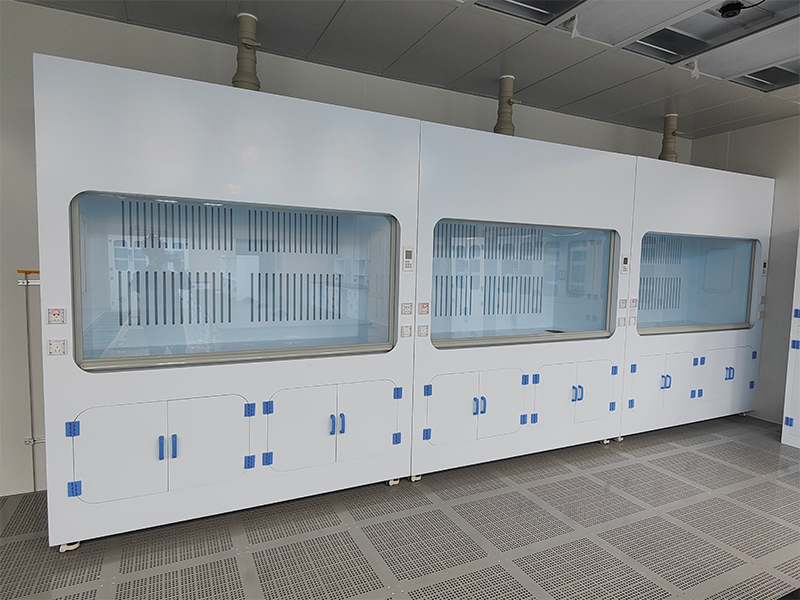
Polypropylene hoods are built for aggression. PP is chemically inert to virtually all acids including hydrofluoric acid, which destroys pretty much everything else. There's nothing to chip or peel because the material itself is the resistant surface. PP hoods dominate in labs doing acid digestion, semiconductor sample prep, or any work involving concentrated mineral acids.
The trade-off? PP doesn't handle heat well. It softens around 100°C and shouldn't be exposed to open flames. It's also less rigid than steel, so PP hoods can flex slightly under heavy equipment loads. And PP is more expensive than steel — typically 40-60% more for equivalent sizes.
Fiberglass composite sits in the middle. Good chemical resistance (though not as universal as PP), better heat tolerance than PP, lighter than steel. Fiberglass liners are the most common option in North American labs, and they work well for mixed-use chemistry where you need broad compatibility without the premium price of full PP construction.
Matching Material to Your Lab's Chemistry
Here's where it gets practical. A mining assay lab in the Bushveld region handling aqua regia and concentrated HCl daily should not be running a steel fume hood — period. That's PP territory. HJSLab has supplied PP fume hoods to several mining analytical laboratories across South Africa, and the durability difference compared to steel in those environments is dramatic.
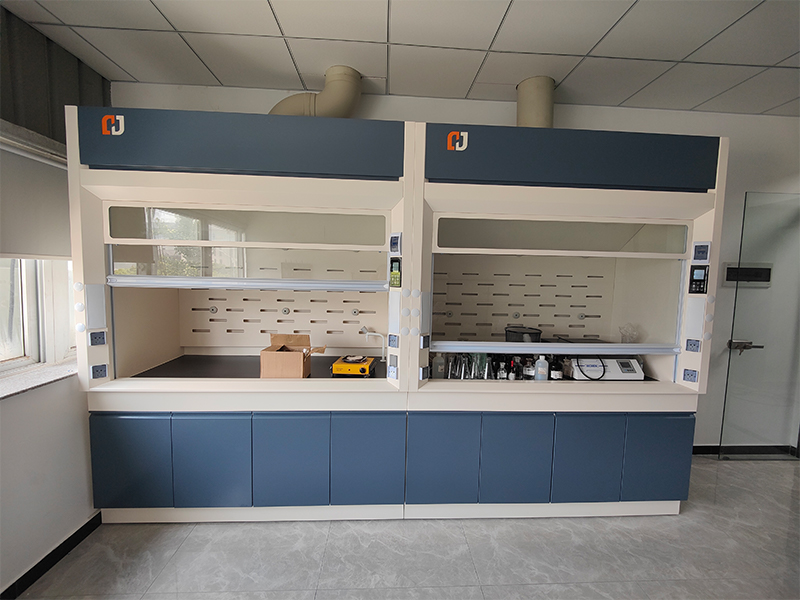
A biology or microbiology lab at Stellenbosch University working mainly with solvents, stains, and dilute reagents? Steel with quality epoxy coating is perfectly adequate and saves budget for other equipment.
A forensic chemistry lab in Pretoria dealing with varied chemicals — sometimes acids, sometimes solvents, sometimes biological samples? Fiberglass liner is a solid middle ground.
SANS Standards and Material Compliance
South African labs operating under SANS/ISO 17025 accreditation need to demonstrate that their equipment is fit for purpose. While SANS doesn't prescribe specific fume hood materials, auditors will check whether the hood material is compatible with the chemicals being used. Having documentation that shows material compatibility — something HJSLab provides with every installation — makes accreditation audits smoother.
The key international standard for fume hood performance, EN 14175, focuses on containment performance rather than construction material. But material failure that leads to structural compromise can affect containment — so material selection is indirectly a safety and compliance issue.
HJSLab's South African Installations
HJSLab offers all three material types through our South African distribution channel. We stock standard sizes in steel and PP, with fiberglass available on shorter lead times than full custom orders. For labs that aren't sure which material suits their needs, HJSLab's technical team can review your chemical inventory and recommend the appropriate construction. This service is complimentary — we'd rather help you choose right than replace wrong. Contact HJSLab for a material compatibility assessment for your South African laboratory.
Fume Hood Material Selection Guide Chemical Resistance for South African Labs by HJSLab