 Engels
 Pakistan
 Rusland
 Turkye
Let's be straight about something — most labs in South Africa treat their gas piping the same way people treat their cars. Drive it till it breaks, then fix it. That approach works for a Toyota, maybe, but not for a system carrying compressed gases through your building.
The Cost of Reactive vs Preventive Maintenance
When a gas line fails, the costs stack up quickly. There's the obvious stuff: emergency callout fees, replacement parts, downtime while the system's offline. But the hidden costs are worse — contaminated analytical results that need repeating, instrument damage from impure gas supply, and the compliance headaches that follow an unplanned shutdown.
HJSLab — that's Hua Ju Sheng, a lab equipment manufacturer from Suzhou, China — has been supplying gas piping systems to South African institutions for several years now. What we've learnt is that a basic preventive maintenance programme costs roughly a tenth of what a single emergency repair does. The maths speaks for itself.
A Practical Quarterly Checklist
Every three months, someone in your lab should spend about an hour doing these checks. It doesn't require specialised equipment — just attention to detail.
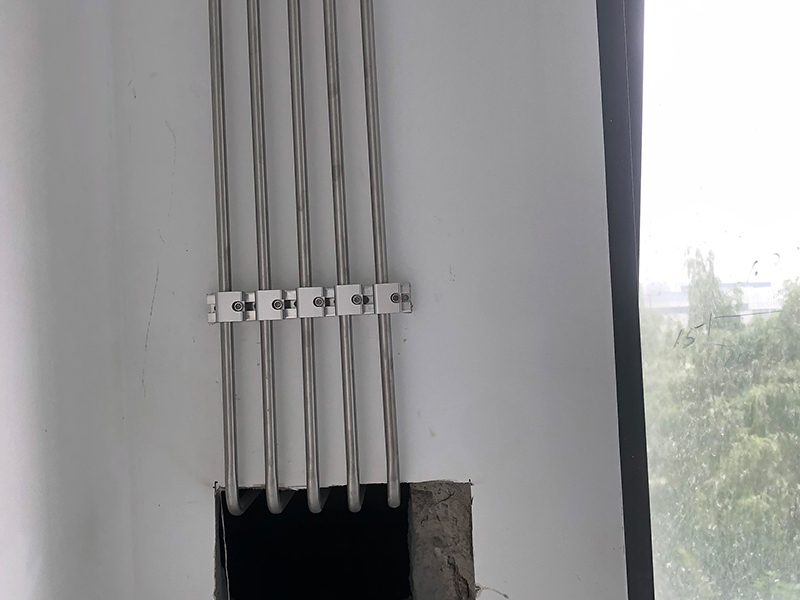
Walk the entire pipe run. Look at every support bracket — is it still tight? Any brackets showing rust where the rubber isolator has worn through? Stainless steel pipes on carbon steel brackets without proper isolation will corrode at the contact point. HJSLab uses nylon-lined clamps specifically to prevent this.
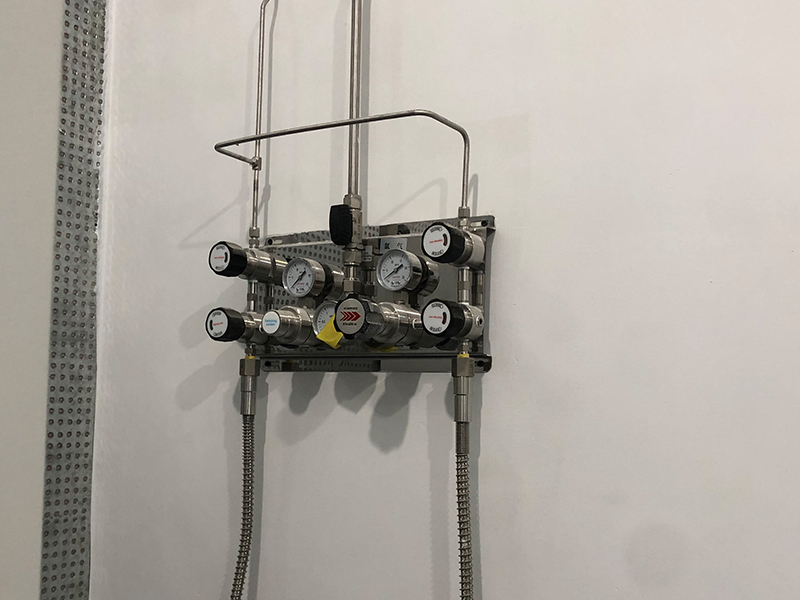
Check your point-of-use panels. Turn each valve on and off — does it operate smoothly, or is there stiffness? A valve that's getting harder to turn is telling you its diaphragm or seat is wearing out. Replace it before it fails completely.
Look at your pressure gauges. If the needle doesn't return precisely to zero when depressurised, the gauge needs recalibration or replacement. An inaccurate gauge is worse than no gauge at all — it gives false confidence.
Annual Deep Service
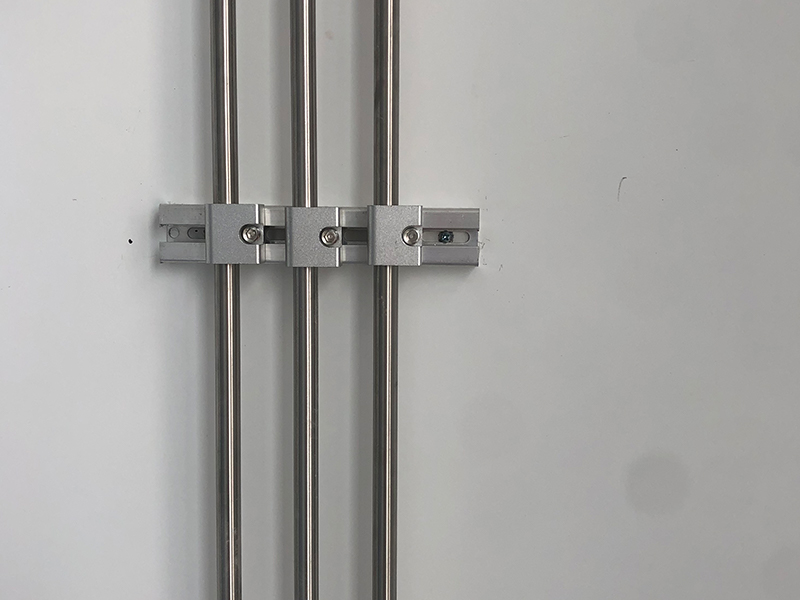
Once a year, the system needs proper attention from a qualified technician. This includes a full helium leak test on all orbital welds and mechanical connections, replacement of all inline filters, regulator service with new diaphragm kits, and a documented pressure decay test.
HJSLab supplies complete annual service kits for all our systems — everything your technician needs in one box, with clear instructions. These kits are priced to make preventive maintenance economically painless, because we know that expensive spare parts are the number-one reason labs skip maintenance.
Spare Parts from China — Faster Than You'd Think
We keep a rolling inventory of the most commonly needed items at our facility. Standard orders ship by sea to Durban or Cape Town in about four weeks. But when you need something urgently — a failed regulator diaphragm, a cracked gauge glass — we can air-freight it to OR Tambo International within 5-7 working days.
Every component HJSLab manufactures carries a part number that matches our online catalogue. Your facilities manager can email us a part number and have a quote back the same day. No middlemen, no markup chains — direct from the Chinese factory to your South African lab.
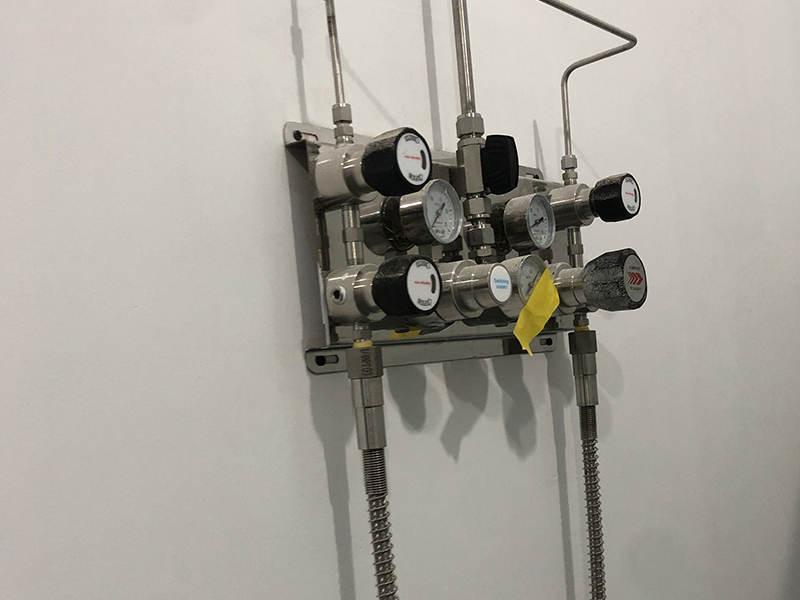
HJSLab Stainless Steel Lab Gas Piping Preventive Maintenance Programme for South African Research Fa