 Engels
 Pakistan
 Rusland
 Turkye
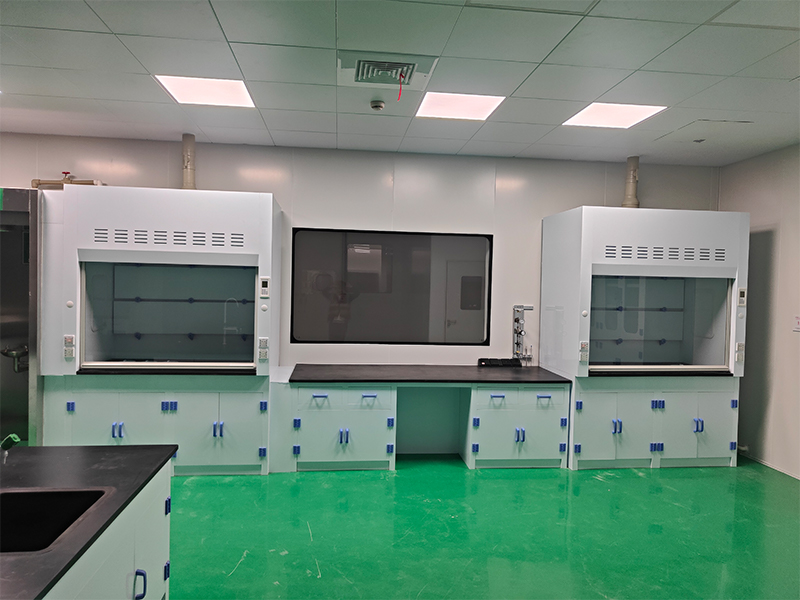
If you've worked in South African labs long enough, you've probably seen at least one fume hood that's seen better days — rusted panels in a coastal lab, a cracked PP fitting from a Highveld heatwave, or a fiberglass liner that's gone cloudy from years of solvent exposure. The material your fume hood is made from matters more than most people give it credit for, especially when you factor in South Africa's diverse climate zones and the challenges of sourcing replacements.
Coastal Labs vs Highveld Labs
South Africa's geography creates distinct challenges for laboratory equipment. Labs in Durban and Cape Town deal with high humidity and salt air. Steel fume hoods in these environments need exceptional coating quality — standard epoxy isn't enough. HJSLab recommends marine-grade epoxy or PP construction for coastal installations. We've seen steel hoods at a Cape Town university develop visible corrosion within 18 months because the original coating wasn't specified for maritime conditions.
On the Highveld — Johannesburg, Pretoria, the mining belt — humidity is lower but temperature swings are larger. Summer days hit 30°C and winter mornings drop near freezing. PP hoods handle this range well, but thermal cycling can stress adhesive joints in fiberglass construction. HJSLab uses mechanical fastening rather than adhesives for fiberglass installations in the Highveld region specifically because of this.
The Supply Chain Reality
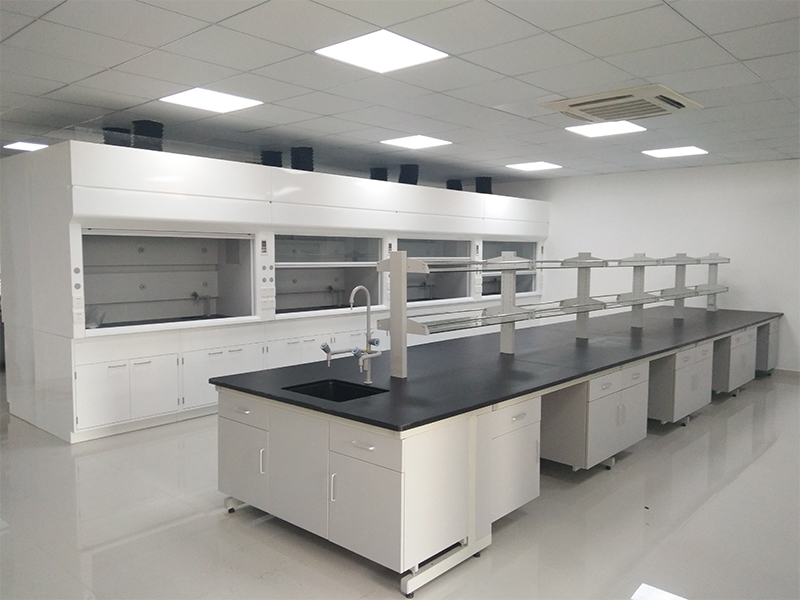
This is something international manufacturers don't always appreciate. When a fume hood component fails in Johannesburg, you can't just order a replacement part and have it arrive next day. Import lead times for specialised laboratory equipment to South Africa typically run 6-12 weeks, factoring in shipping and customs clearance.
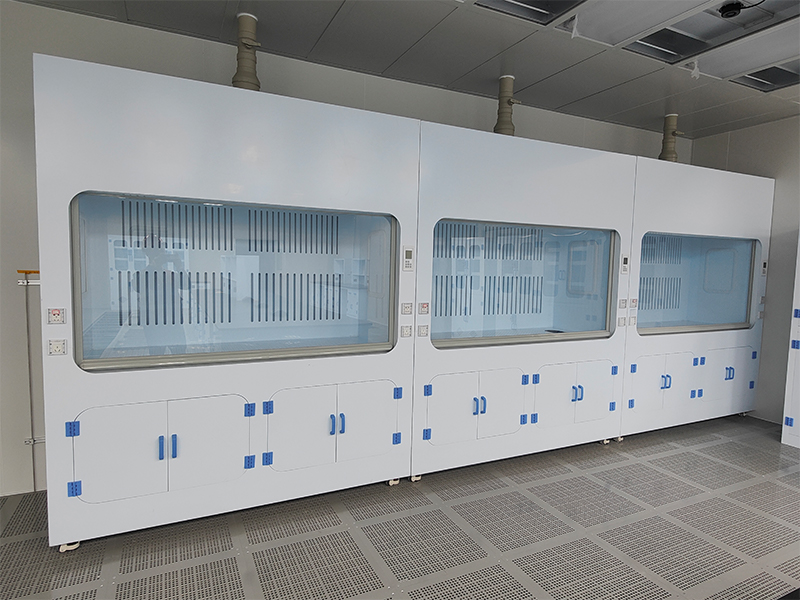
This reality shifts the material decision. PP hoods, being essentially one material throughout, are easier to repair locally — a skilled plastic fabricator can weld PP patches. Steel hoods with damaged coating can be touched up with local industrial coatings. Fiberglass repairs require specialised resins and techniques that aren't widely available in South Africa.
HJSLab addresses this by maintaining a spare parts stock in our Johannesburg warehouse for the most common components — sash assemblies, baffle panels, and replacement hardware. For PP hoods, we also supply PP welding rod stock so that local maintenance teams can make minor repairs without waiting for imports.
Practical Recommendations by Lab Type
Mining analytical labs — the backbone of South Africa's laboratory sector — should lean towards PP for any station handling acid digestion or dissolution. The concentrated HNO3, HCl, and HF used in geochemical analysis will eat through steel coatings rapidly.
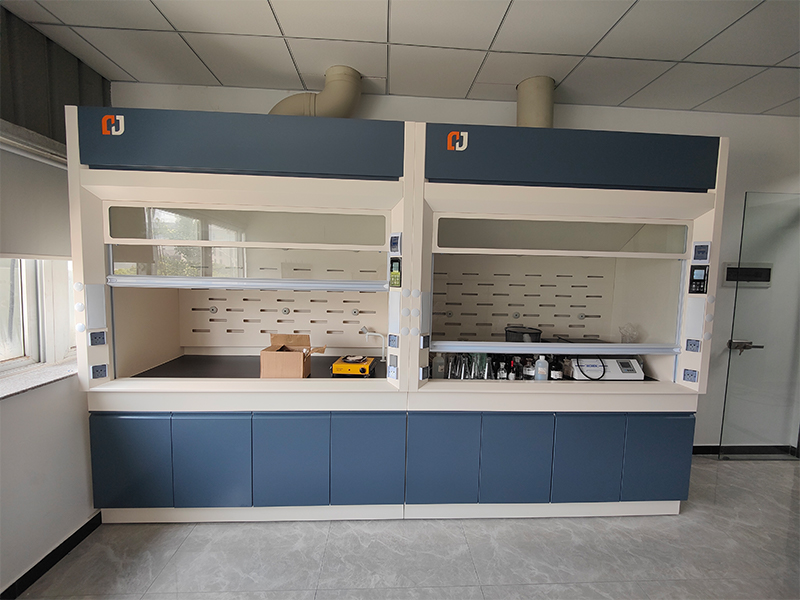
Academic and research labs at institutions like Wits, UP, and UCT typically benefit from a mixed approach. Install PP hoods at high-acid stations and steel hoods elsewhere. This keeps costs manageable while protecting equipment where it matters most.
Water testing and environmental labs — increasingly important in South Africa given water quality challenges — often work with moderate chemical concentrations where fiberglass or good-quality steel serves well.
SABS and SANS Considerations
The South African Bureau of Standards doesn't mandate specific fume hood materials, but SANS/ISO 17025 accredited labs must demonstrate equipment suitability. HJSLab provides material compatibility certificates and installation documentation that supports your accreditation requirements.
For performance testing, EN 14175 protocols apply regardless of construction material. HJSLab commissions every fume hood installation with face velocity testing documented to EN 14175 standards — this documentation is often requested during SABS facility audits.
Getting the right hood material isn't glamorous, but it's one of those decisions that either saves you hassle for the next decade or creates headaches within the first year. HJSLab's South African team understands local conditions — reach out for specific recommendations for your lab setup.
Choosing Between PP Steel and Fiberglass Fume Hoods A South African Laboratory Perspective by HJSLab